
Multi-Site Surveillance: What Enterprises Actually Need
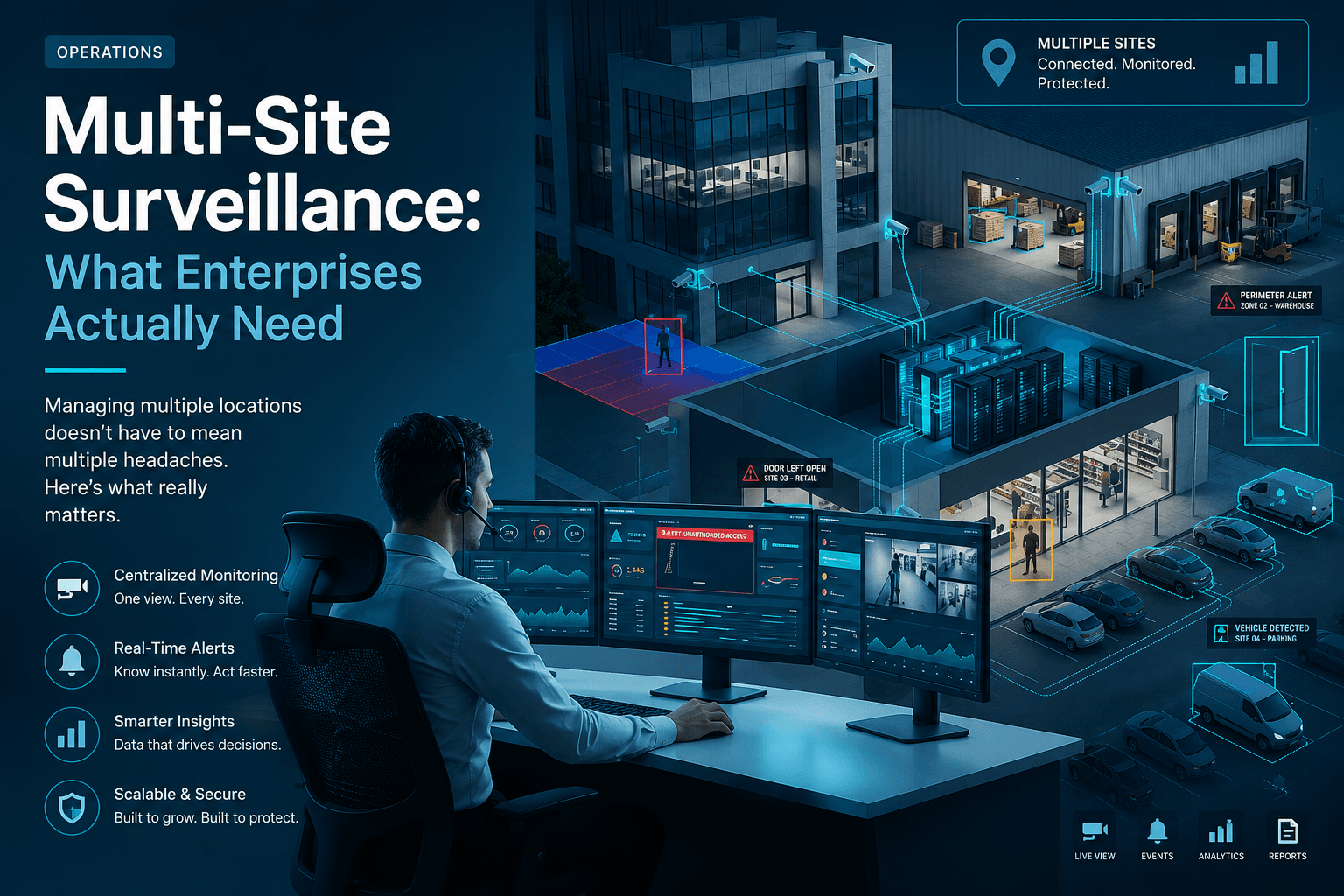
Securing a single site is largely a hardware and staffing problem: enough cameras, in the right places, watched by someone paying attention. Scale that to twenty, fifty, or two hundred locations, and the problem changes shape entirely — it becomes a data and operations problem.
The first thing that breaks at scale is visibility. If every site's cameras feed into a separate, siloed system, nobody at HQ has a real picture of what's happening across the business — just a patchwork of local systems that don't talk to each other. A unified, multi-site dashboard isn't a nice-to-have at that scale, it's the only way regional and corporate teams can actually see what's going on.
The second thing that breaks is consistency. Different sites configured by different local teams end up with different detection rules, different alert thresholds, and different response protocols — which means the same violation might get flagged at one location and missed entirely at another. Centralized configuration, pushed consistently across every site, closes that gap.
The third is reporting. When an incident happens at site #47, someone eventually has to explain what happened, when, and what was done about it — for insurance, for compliance, or for an internal review. Enterprises that treat reporting as an afterthought end up reconstructing incidents manually from raw footage. Enterprises that build it into the monitoring platform from day one just pull the report.
More from the blog
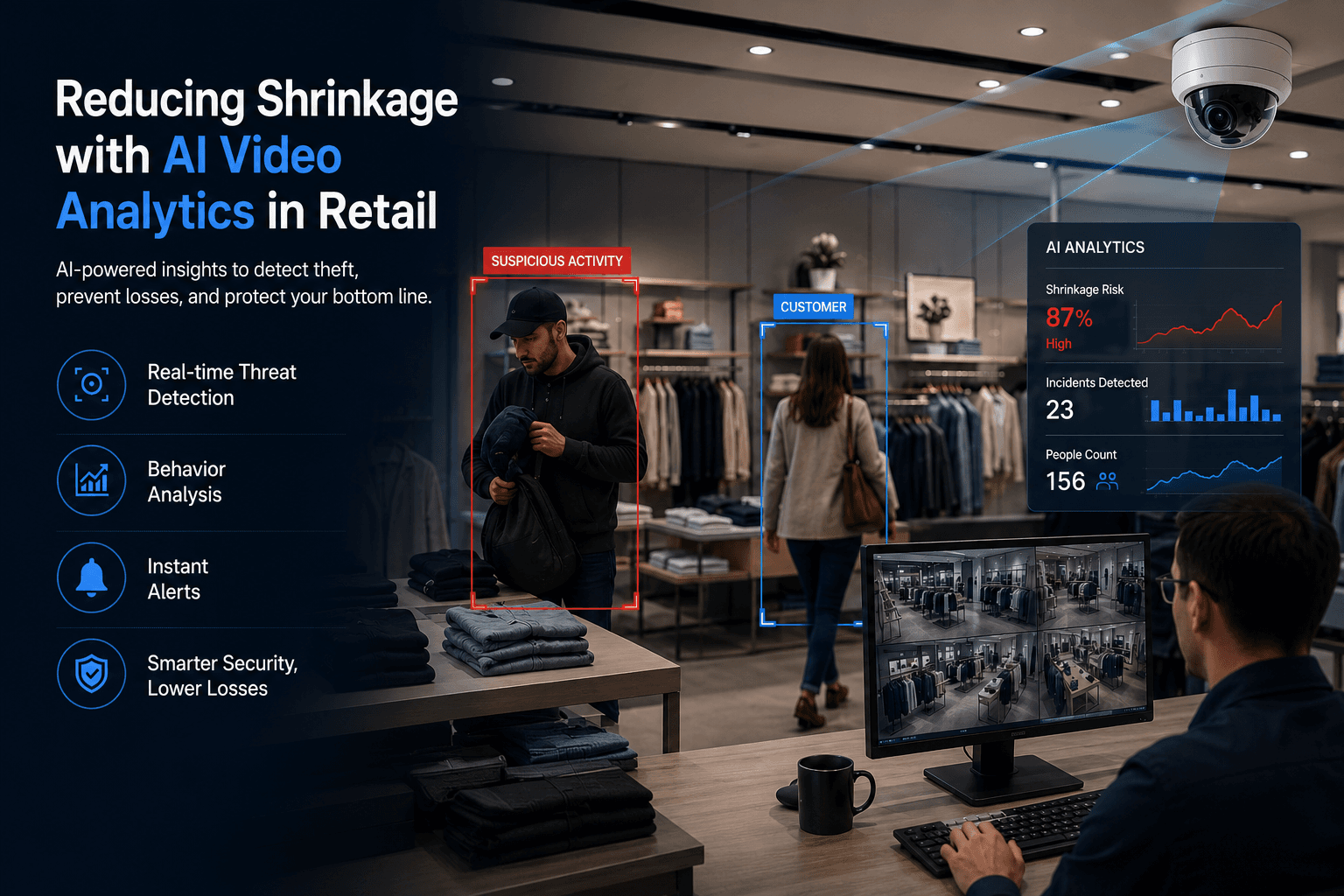
Reducing Shrinkage with AI Video Analytics in Retail
Loss prevention teams are drowning in footage. AI-driven video analytics changes the equation from reviewing everything to reviewing what matters.
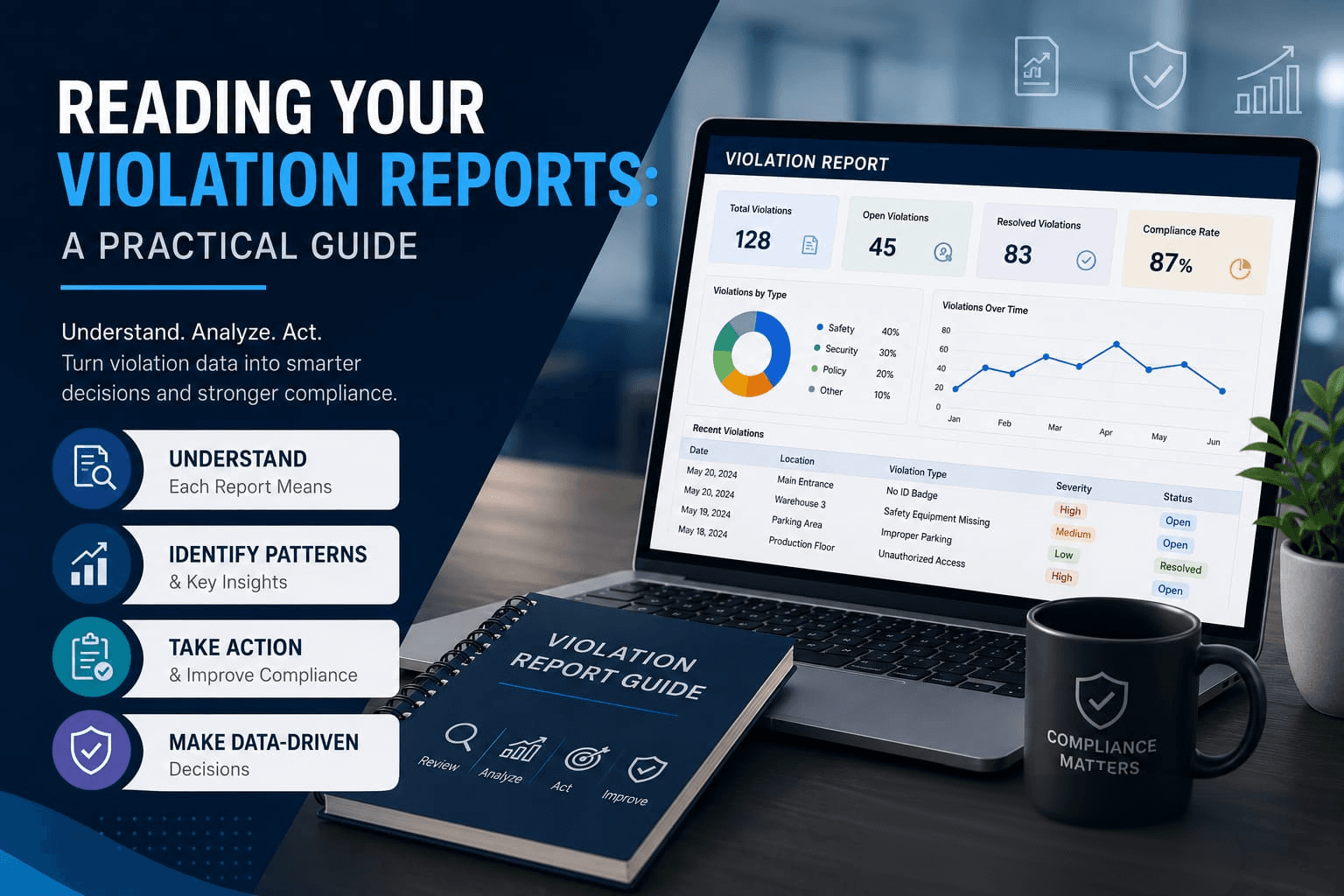
Reading Your Violation Reports: A Practical Guide
Automated reporting is only useful if your team actually knows what to do with it. Here's how to turn a stack of incident reports into operational decisions.
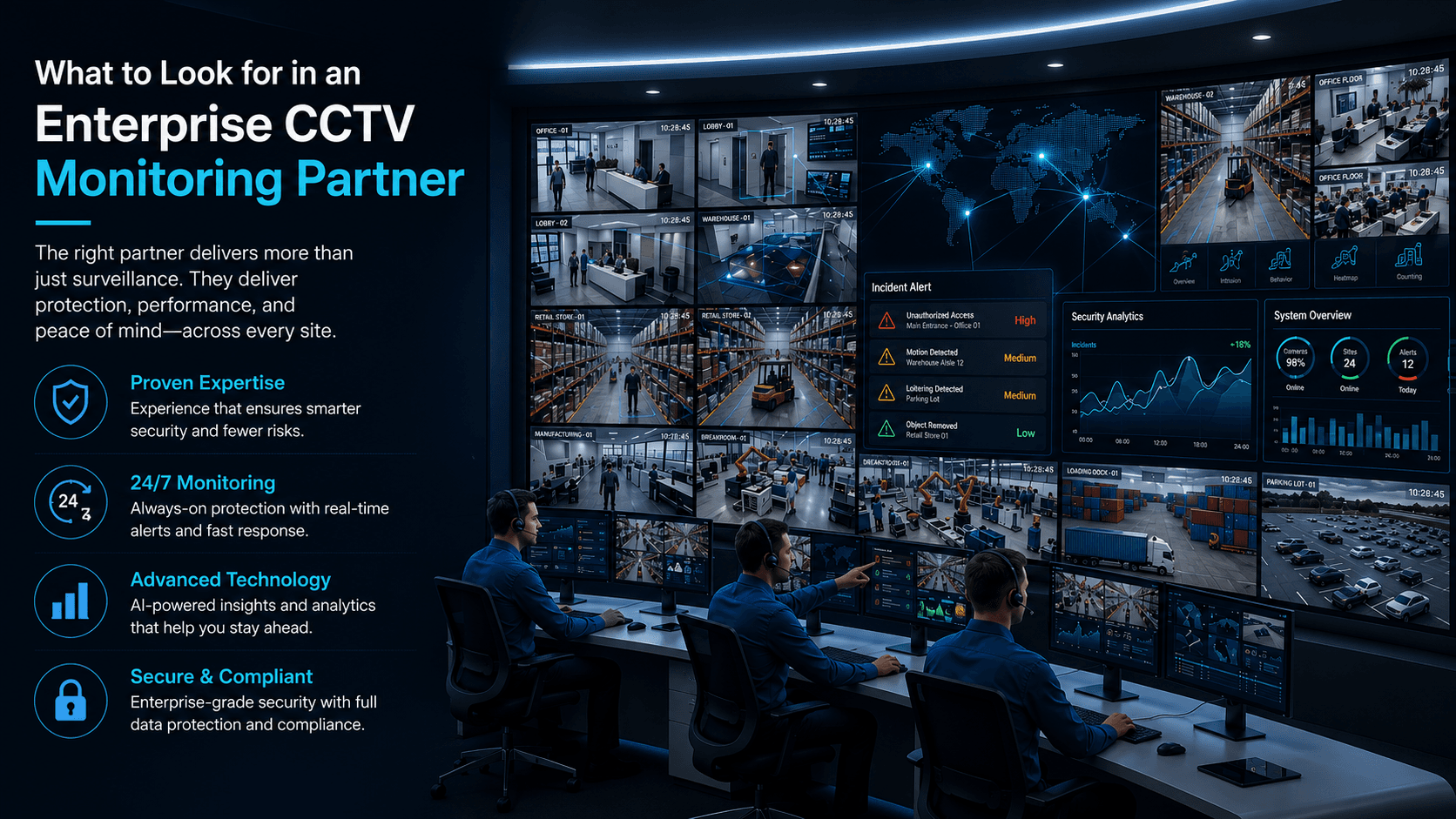
What to Look for in an Enterprise CCTV Monitoring Partner
Not all monitoring providers are built for enterprise scale. Here are the questions worth asking before you sign a contract.
Security Insights
Practical monitoring & AI security insight, straight to your inbox.
Nexus Insights is our monthly briefing for security and operations leaders.