
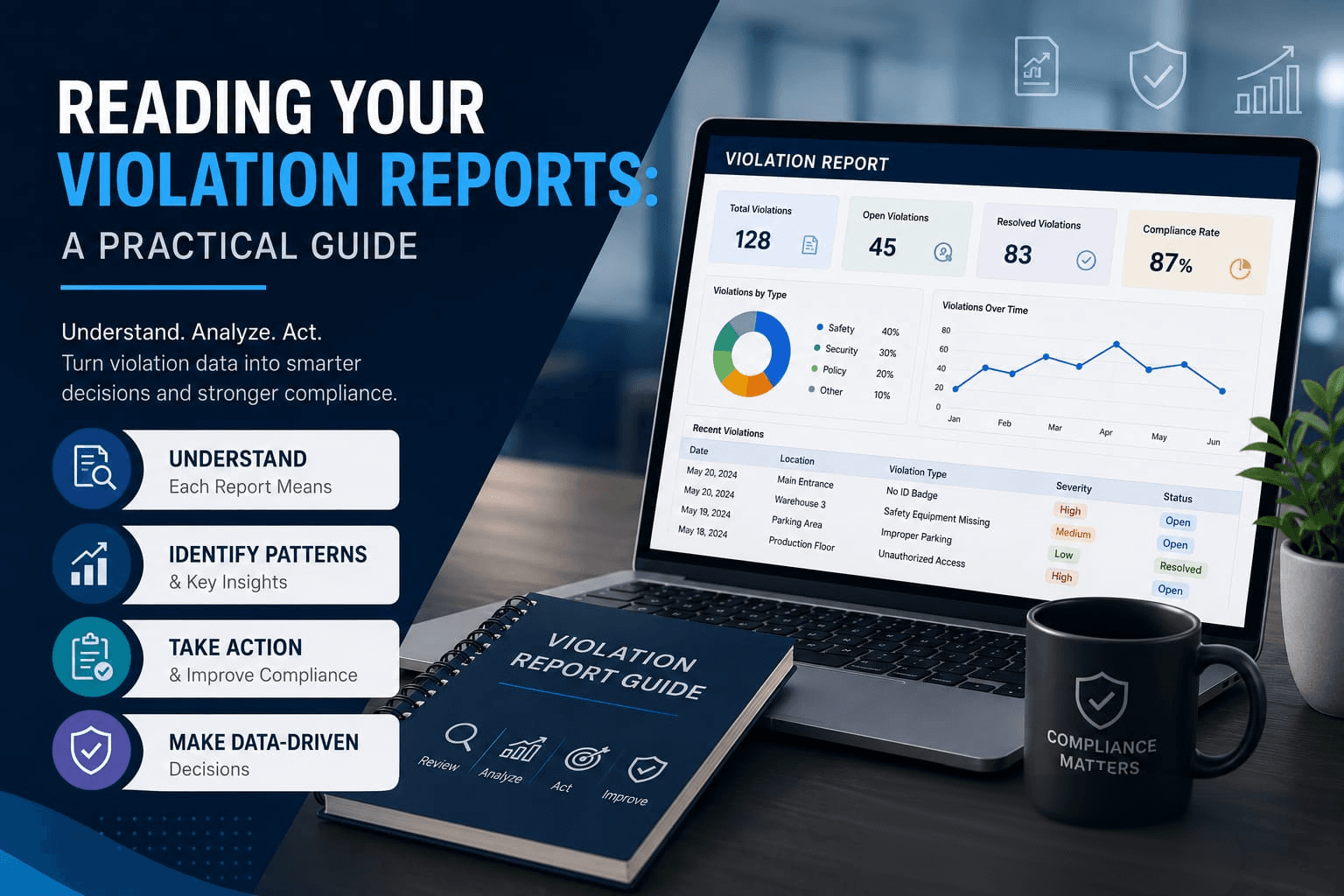
It's easy to treat automated violation reports as a compliance box to check — download it, file it, move on. That's a missed opportunity. The real value of consistent reporting shows up when you look across reports, not just at any single one.
Start with frequency by location. If one site consistently generates more incidents of a given type than comparable sites, that's rarely random — it usually points to a specific gap: a blind spot, a process that isn't being followed, or a physical layout issue worth a site visit.
Look at time-of-day patterns next. Incidents clustering around shift changes, closing time, or specific hours often point to staffing or process gaps at those windows specifically, rather than a general risk that needs blanket fixing.
Finally, track trend direction, not just totals. A violation type trending down after a rule change or a staff briefing tells you the intervention worked. One trending up despite no operational change is worth investigating before it becomes a bigger problem — that's the entire point of catching this in near real time instead of finding out at the annual audit.
More from the blog

Reducing Shrinkage with AI Video Analytics in Retail
Loss prevention teams are drowning in footage. AI-driven video analytics changes the equation from reviewing everything to reviewing what matters.

What to Look for in an Enterprise CCTV Monitoring Partner
Not all monitoring providers are built for enterprise scale. Here are the questions worth asking before you sign a contract.
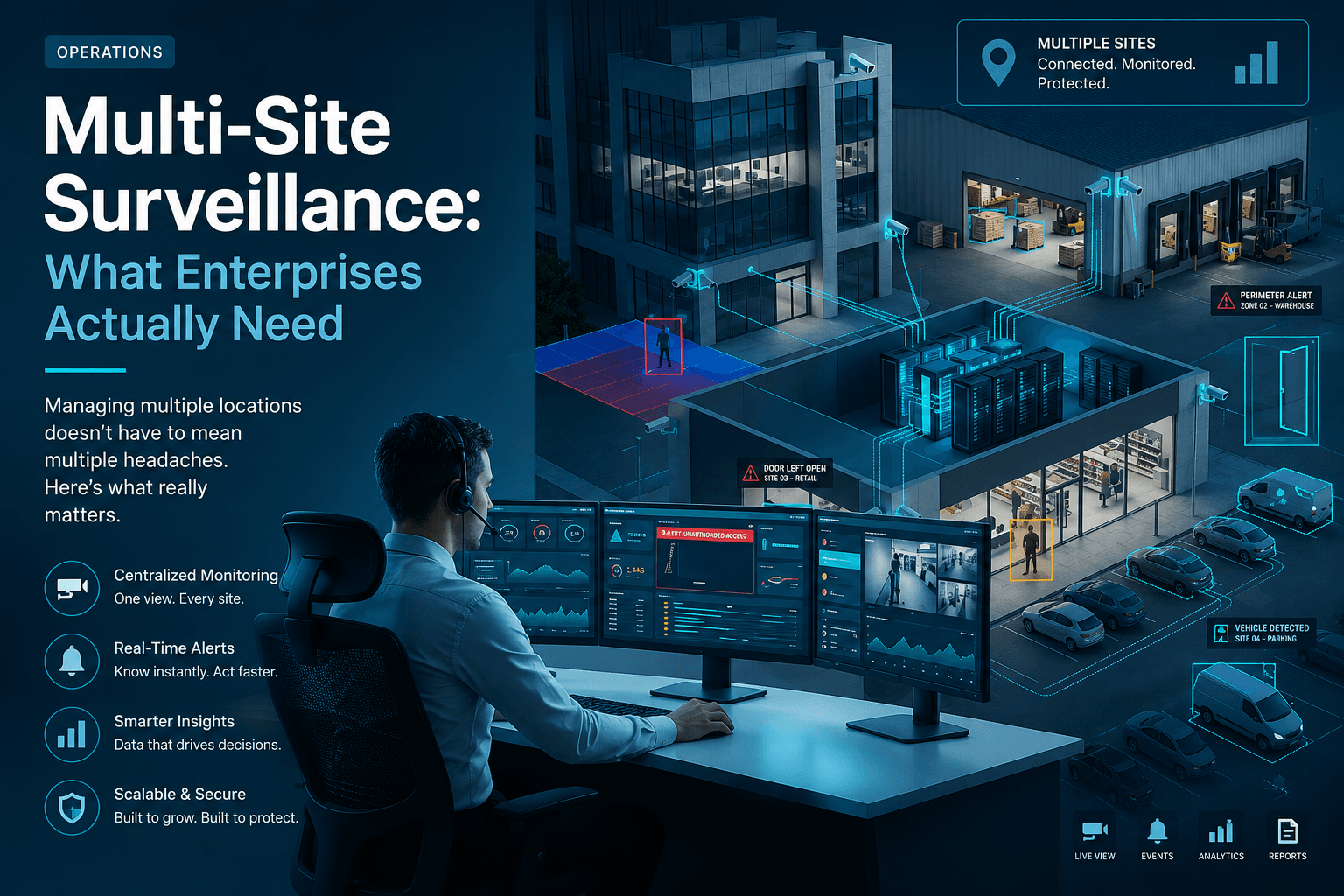
Multi-Site Surveillance: What Enterprises Actually Need
Running surveillance across dozens of locations is a different problem than securing one site. Here's what actually matters when you're scaling coverage across a footprint.
Security Insights
Practical monitoring & AI security insight, straight to your inbox.
Nexus Insights is our monthly briefing for security and operations leaders.